(Photo credit: Arizona Cardinals)
This is part one of a three part series. This part will focus on the “early years” of key players from the 2004 NFL Draft (2004-05 to 2010-11).
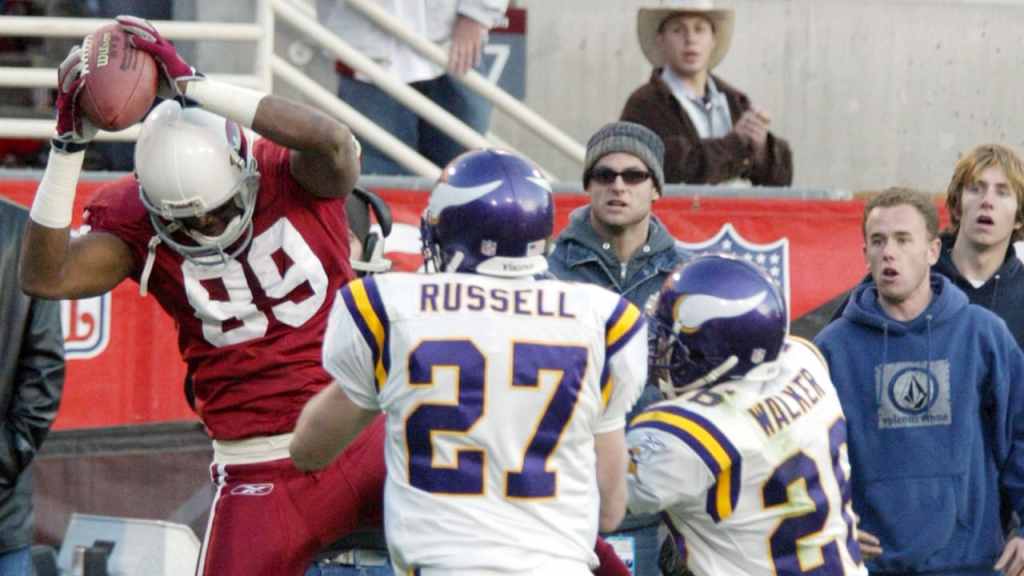
On December 28, 2003, the Arizona Cardinals faced the Minnesota Vikings. Minnesota was looking to clinch the National Football Conference (NFC) North division and a playoff berth with a win, while Arizona would clinch the first overall pick in the 2004 NFL Draft with a loss. Late in the fourth quarter, trailing 17-6, it seemed like that would take place. However, after scoring a touchdown and recovering an onside kick, Arizona still had a chance. That chance felt all but gone with 10 seconds left, as Arizona faced a 4th & 20 from Minnesota’s 28 yard line. Then, this happened.
With this play, Arizona eventually dropped to the third overall pick, where they took wide receiver (WR) and future Pro Football Hall of Famer Larry Fitzgerald. The San Diego (now Los Angeles (LA)) Chargers rose to the first pick and took quarterback (QB) Eli Manning. However, due to Manning’s refusal to play for the Chargers, he was eventually traded to the New York Giants for Phillip Rivers, the fourth overall pick in the draft.
With the Poole catch in mind, one question looms: What if Arizona didn’t complete the comeback and clinched the first overall pick?
Guidelines
Before we dive in, there are a few guidelines/assumptions to keep in mind.
1.) This article will focus mainly on the three Hall of Fame caliber QBs from the 2004 draft class: Manning, Rivers, and Ben Roethlisberger (a.k.a. Big Ben).
2.) This timeline will start with the 2004-05 season (the trio’s rookie year) and conclude with the 2021-22 season (Big Ben’s final year).
3.) The statistics listed for each QB are not projection-based; they are the real-life statistics for each season.
4.) Any offseason/draft moves will be stated prior to the breakdown of the season.
5.) Any major postseason changes will be stated in its own section after the regular season summaries.
2004 NFL Draft
With the first pick in the draft, Arizona selects Eli Manning. With the second pick in the draft—and the inability to draft Manning and subsequently trade him—the San Diego Chargers take the “best player available” approach and select Larry Fitzgerald. With the fourth pick in the draft, the New York Giants take Ben Roethlisberger, as Manning would likely be more willing to play for Arizona than San Diego. With the 11th pick in the draft, the Pittsburgh Steelers take Philip Rivers, who they expected to select in the actual draft.
Since San Diego and New York do not make a trade in this universe, New York keeps their 2004 third round pick (65th overall, became kicker Nate Kaeding) and their 2005 first round (12th overall, became linebacker Shawne Merriman) and fifth round (144th overall, which San Diego traded to the Tampa Bay Buccaneers for offensive tackle (OT) Roman Oben) picks. Despite this, I think San Diego still finds a way to acquire Kaeding and Oben, allowing them to choose Fitzgerald over Robert Gallery, the best OT prospect going into the draft.
2004-05 Season
Manning: 9 games (7 games started (GS)), 1-6 QB record (6-10 team record), 95 completions/197 attempts (48.2%), 1,043 yards, 6 touchdowns (TD), 9 interceptions (INT), 1 game-winning drive (GWD) (1 fourth quarter comeback)
After beating out Josh McCown for the starting QB job, Manning takes over and doesn’t look back. Since he would be playing for the full season, I’d expect his numbers to look close to his 2005 stats (his first full season in real life). Arizona still misses the playoffs, but they finish 5-11, as they likely lose to New York with Manning starting (Arizona won 17-14 in the actual game).
Roethlisberger: 14 games (13 GS), 13-0 (15-1 team record), 196/295 (66.4%), 2,621 yards, 17 TD, 11 INT, 5 GWD (4 fourth quarter comebacks)
Like Manning in real life, Big Ben takes over for starting QB Kurt Warner in the middle of the season. However, with wins over the Pittsburgh Steelers and Cincinnati Bengals (along with the aforementioned Cardinals win), New York finishes with a 9-7 record and makes the playoffs. Despite only starting seven games, Roethlisberger likely has comparable numbers to his actual rookie season numbers, propelling him into the Offensive Rookie of the Year (OROY) award race with Manning, Rivers, and Fitzgerald.
Rivers: 2 games (0 GS), 12-4 team record, 5/8 (62.5%), 33 yards, 1 TD, 0 INT, 0 GWD
Like Roethlisberger in real life, Rivers takes over for QB Tommy Maddox after Maddox suffers an injury against Baltimore. With a reliable running game and defense to lean on, I believe Rivers puts up numbers comparable to his 2007 stats. However, I think Pittsburgh loses a few more games with Rivers. Pittsburgh still makes the playoffs, but the New England Patriots end up with home field advantage throughout the playoffs.
2004 OROY Race
While Big Ben was the unanimous OROY in real life, I believe Larry Fitzgerald takes home the award, as playing with Drew Brees allows him to put up strong rookie numbers, and winning right away possibly sways some of the voters.
2005-06 Season
In the offseason, WR Plaxico Burress still signs with the Giants, allowing him to play with Big Ben in this universe (they played in Pittsburgh together in real life). Also, with Manning in Arizona, Kurt Warner signs with the Chicago Bears, who were one of his options before he chose Arizona in real life. Finally, despite not having Rivers or the ability to take a young QB (Aaron Rodgers was taken before San Diego’s original pick), the Chargers still franchise tag QB Drew Brees after his breakout season.
Manning: 16 GS, 11-5, 294/557 (52.8%), 3,762 yards, 24 TD, 17 INT, 2 GWD (1 fourth quarter comeback)
With Arizona, Manning likely puts up stats close to his real life ones for this season. I do think his GWD and fourth quarter comeback stats increase, as Arizona gets wins against the St. Louis (now LA) Rams, Carolina Panthers, and Indianapolis Colts to finish with an 8-8 record. Despite the increase in wins, Arizona still misses the playoffs.
Roethlisberger: 12 GS, 9-3 (11-5 team record), 168/268 (62.7%), 2,385 yards, 20 total TD (17 passing, 3 rushing), 9 INT, 2 GWD (2 fourth quarter comebacks)
Unlike his actual 2005 season, Roethlisberger doesn’t suffer an injury against San Diego. As a result, he plays the full season and helps New York finish with a 12-4 record (I think New York beats the Minnesota Vikings, a team they lost to with Manning throwing 4 INTs). With the full season, along with a supporting cast featuring Burress, WR Amani Toomer, tight end (TE) Jeremy Shockey, and running back (RB) Tiki Barber, I think Big Ben has a statistical year similar to his 2007 season, but with fewer TD passes. With 12 wins, New York clinches the second overall seed in the NFC and a first round bye.
Rivers: 2 games (0 GS), 9-7 team record, 12/22 (54.5%), 115 yards, 0 TD, 1 INT, 0 GWD
Like Roethlisberger, Rivers follows up a solid rookie season with a full second season and a 12-4 finish (I think Pittsburgh beats Jacksonville in overtime, as I believe Rivers wouldn’t throw a pick six like Maddox did). I also believe Rivers’ statistics would be comparable to his 2006 stats (his first full season in real life). With 12 wins, Pittsburgh wins the American Football Conference (AFC) North over the Cincinnati Bengals (Cincinnati won the division in real life).
2006 NFL Playoffs
Despite the changes in seeding, the Seattle Seahawks and Pittsburgh Steelers still make it to the 2006 Super Bowl. Pittsburgh wins, and Philip Rivers wins his first championship.
2006-07 Season
In the offseason, the Chargers re-sign Drew Brees to a long-term contract, as they don’t have Rivers as insurance in this universe. With Brees staying in San Diego, and the New Orleans Saints looking for an upgrade at QB, they decide to sign Kurt Warner to a short-term deal (likely one or two years). Also, Arizona signs RB Edgerrin James.
In the draft, despite signing Warner, New Orleans passes on RB Reggie Bush and takes his University of Southern California (USC) teammate, QB Matt Leinart.
Manning: 16 GS, 8-8, 301/522 (57.7%), 3,244 yards, 24 TD, 18 INT, 2 GWD (2 fourth quarter comebacks)
In this season, Manning likely puts up comparable numbers to his real life stats, and Arizona finishes with a 6-10 record (I believe they win a game against the Rams that they originally lost).
Roethlisberger: 15 GS, 7-8 (8-8 team record), 280/469 (59.7%), 3,513 yards, 18 TD, 23 INT, 3 GWD (2 fourth quarter comebacks)
After recovering from a motorcycle accident, Roethlisberger misses the first game of the season (like he did in real life). Also, he has a down year statistically. Despite this, New York still finishes with an 8-8 record, and they make the playoffs.
Rivers: 16 GS, 14-2, 284/460 (61.7%), 3,388 yards, 22 TD, 9 INT, 4 GWD (4 fourth quarter comebacks)
On a quest for a repeat, I think Rivers builds on his success and puts up numbers that are slightly better than his actual 2006 statistics. With a much healthier Rivers, Pittsburgh finishes with a 9-7 record (I believe they sweep Cincinnati instead of losing one). Unfortunately, due to tiebreakers (including a loss to the Denver Broncos), they miss the playoffs.
2007-08 Season
In the offseason, the New England Patriots still sign WR Donte Stallworth and trade their 2007 second round (60th overall) and seventh round (238th overall) picks for WR Wes Welker. During the draft, New England still trades their 2007 fourth round pick (110th overall) for WR Randy Moss, completing their WR room makeover and giving QB Tom Brady plenty of weapons to work with.
Manning: 16 GS, 10-6, 297/529 (56.1%), 3,336 yards, 23 TD, 20 INT, 3 GWD (3 fourth quarter comebacks)
With new head coach Ken Whisenhunt, I believe Eli produces numbers similar to his 2008 stats, but with a few more TD passes. Arizona finishes with a 9-7 record (I believe they beat New Orleans, as Warner or Leinart would be starting instead of Brees). Unfortunately, their loss to Washington keeps them out of the playoffs.
Roethlisberger: 15 GS, 10-5 (10-6 team record), 264/404 (65.3%), 3,154 yards, 34 total TD (32 passing, 2 rushing), 11 INT, 2 GWD (1 fourth quarter comeback)
I don’t think too much changes here, as Big Ben has a bounce back season and New York finishes 10-6, securing a playoff spot.
Rivers: 16 GS, 11-5, 277/460 (60.2%), 3,152 yards, 21 TD, 15 INT, 1 GWD (1 fourth quarter comeback)
I think Pittsburgh still finishes with a 10-6 record and makes the playoffs, but Rivers has stats similar to his 2010 season (with less passing yards).
2008 NFL Playoffs
New England and New York still make it to the 2008 Super Bowl. However, despite Roethlisberger’s efforts, this becomes the year of the Patriots, as Tom Brady and Randy Moss finish off their historic individual seasons with a Super Bowl win, completing a perfect 19-0 season.
2008-09 Season
Manning: 16 GS, 12-4, 289/479 (60.3%), 3,238 yards, 21 TD, 10 INT, 3 GWD (3 fourth quarter comebacks)
With Manning under center, Arizona finishes with a 10-6 record (I believe they win the game against the Giants), and he puts up numbers that are comparable to his 2009 stats.
Roethlisberger: 16 GS, 12-4 (15-1 team record), 281/469 (59.9%), 3,301 yards, 17 TD, 15 INT, 4 GWD (4 fourth quarter comebacks)
In this universe, due to the Super Bowl loss the year before (in addition to the Arizona loss), the Plaxico Burress incident never takes place. With Burress healthy for 16 games, New York still finishes with a 12-4 record (I believe they win their Week 15 matchup against the Dallas Cowboys, but get swept by the Philadelphia Eagles), and Big Ben puts up comparable numbers to his 2012 stats.
Rivers: 16 GS, 8-8, 312/478 (65.3%), 4,009 yards, 34 TD, 11 INT, 4 GWD (3 fourth quarter comebacks)
This season, Pittsburgh still finishes with a 12-4 record (I believe they beat Indianapolis, but lose to San Diego), and Rivers produces numbers that are comparable to this season’s stats.
2009 NFL Playoffs
Despite the change in records, the seeding stays the same for both conferences. This postseason becomes the year of the Chargers, as the tandem of Drew Brees and “Playoff Larry” Fitzgerald (30 receptions, 546 yards, 7 TD in the 2008 postseason) overwhelm defenses on the way to the Super Bowl, where they face the Philadelphia Eagles. While Philly gives San Diego a serious run, Fitz proves to be too much for their secondary, as he takes home Super Bowl MVP honors after putting up comparable production to his real-life stats (9 receptions, 152 yards, 3 TD against Philly in the 2008 NFC Championship game).
2009-10 Season
Manning: 16 GS, 8-8, 317/509 (62.3%), 4,021 yards, 27 TD, 14 INT, 2 GWD (1 fourth quarter comeback)
After an appearance in the NFC Championship game, Arizona finishes with an 8-8 record (I believe they lose to New York and Minnesota). With this record, along with the San Francisco 49ers holding the head-to-head tiebreaker over Arizona, they miss the playoffs.
Roethlisberger: 15 GS, 9-6 (9-7 team record), 337/506 (66.6%), 4,328 yards, 28 total TD (26 passing, 2 rushing), 12 INT, 3 GWD (2 fourth quarter comebacks)
With Big Ben at the helm, New York finishes with a 9-7 record (I believe they win against Denver) and he produces comparable numbers to his real life statistics from this season. However, New York still misses the playoffs.
Rivers: 16 GS, 13-3, 317/486 (65.2%), 4,254 yards, 28 TD, 9 INT, 4 GWD (2 fourth quarter comebacks)
With Rivers putting up stats comparable to his real life numbers this season, Pittsburgh finishes with an 11-5 record (I believe they beat the Kansas City Chiefs and the Oakland (now Las Vegas) Raiders). With 11 wins, Pittsburgh clinches the AFC North division and makes the playoffs as the third overall seed.
2010 NFL Playoffs
In this postseason, New Orleans feels the loss of Drew Brees, as they get knocked out in the first round after finishing with a 10-6 record (I believe they lose to the Giants, Miami Dolphins, and Carolina Panthers). In the NFC Championship game, Brett Favre continues his revenge tour against the Green Bay Packers and helps Minnesota move on to the Super Bowl. On the AFC side of the bracket, league MVP Peyton Manning and the Indianapolis Colts breeze through the competition, setting up a Favre-Manning Super Bowl matchup.
The 2010 Super Bowl proves to be an instant classic, as both QBs showcase why they will be future first ballot Hall of Famers. However, Peyton Manning proves that he is worthy of being the league MVP, as he leads Indianapolis on a game-winning drive, with kicker Adam Vinatieri splitting the uprights as time expires. Manning takes home his second Super Bowl MVP, and the Colts win, 34-31.
2010-11 Season
In the offseason, Kurt Warner retires, leaving New Orleans to start Matt Leinart for the upcoming season.
Manning: 16 GS, 10-6, 339/539 (62.9%), 4,002 yards, 31 TD, 25 INT, 1 GWD (1 fourth quarter comeback)
This season, Eli puts up similar numbers to his 2009 stats, and the Cardinals finish with a 7-9 record (I believe they win the Week 7 game against the Seattle Seahawks and beat Carolina). While the increase in wins gives Arizona a shot at the playoffs, the Rams hold the division record tiebreaker.
Roethlisberger: 12 GS, 9-3 (12-4 team record), 240/389 (61.7%), 3,200 yards, 17 TD, 5 INT, 3 GWD (2 fourth quarter comebacks)
Big Ben puts up comparable numbers to his 2009 stats, and New York finishes with a 10-6 record. However, due to New Orleans losing a few more games, New York sneaks into the playoffs over Tampa Bay due to the “common opponents” tiebreaker.
Rivers: 16 GS, 9-7, 357/541 (66%), 4,710 yards, 30 TD, 13 INT, 1 GWD (1 fourth quarter comeback)
With Rivers, Pittsburgh finishes with a 13-3 record (I believe they beat New Orleans), and he puts up comparable numbers to his real life stats from this season.
2011 NFL Playoffs
Despite the changes in seeding, Green Bay and Pittsburgh still face off in the 2011 Super Bowl. While Philip Rivers plays well, Aaron Rodgers still plays like the best player on the field and wins the Super Bowl MVP award.
Recap
So far, the most successful player out of the 2004 draft class is likely Larry Fitzgerald, as he has a Super Bowl ring, Super Bowl MVP, and the 2004 OROY award. Philip Rivers is arguably the most successful player out of the 2004 QB trio, as he has a Super Bowl ring, while Eli and Big Ben are still searching for their first.
Outside of the draft class, players like LaDainian Tomlinson and Antonio Gates have rings, while Tom Brady and Peyton Manning are ahead of their pace in terms of Super Bowl wins (Brady didn’t get his fourth ring until the 2014-15 season in real life, and Peyton didn’t get his second until the 2015-16 season).
Stay tuned for part two!
 Brian's Deductions
Leave a comment